

The Challenge
Real Estate Market Challenges & Our Law Firm's Approach
Ontario's real estate market in 2026 presents unprecedented challenges for both buyers and sellers, with systemic pressures creating complex legal and financial risks that demand experienced legal representation.
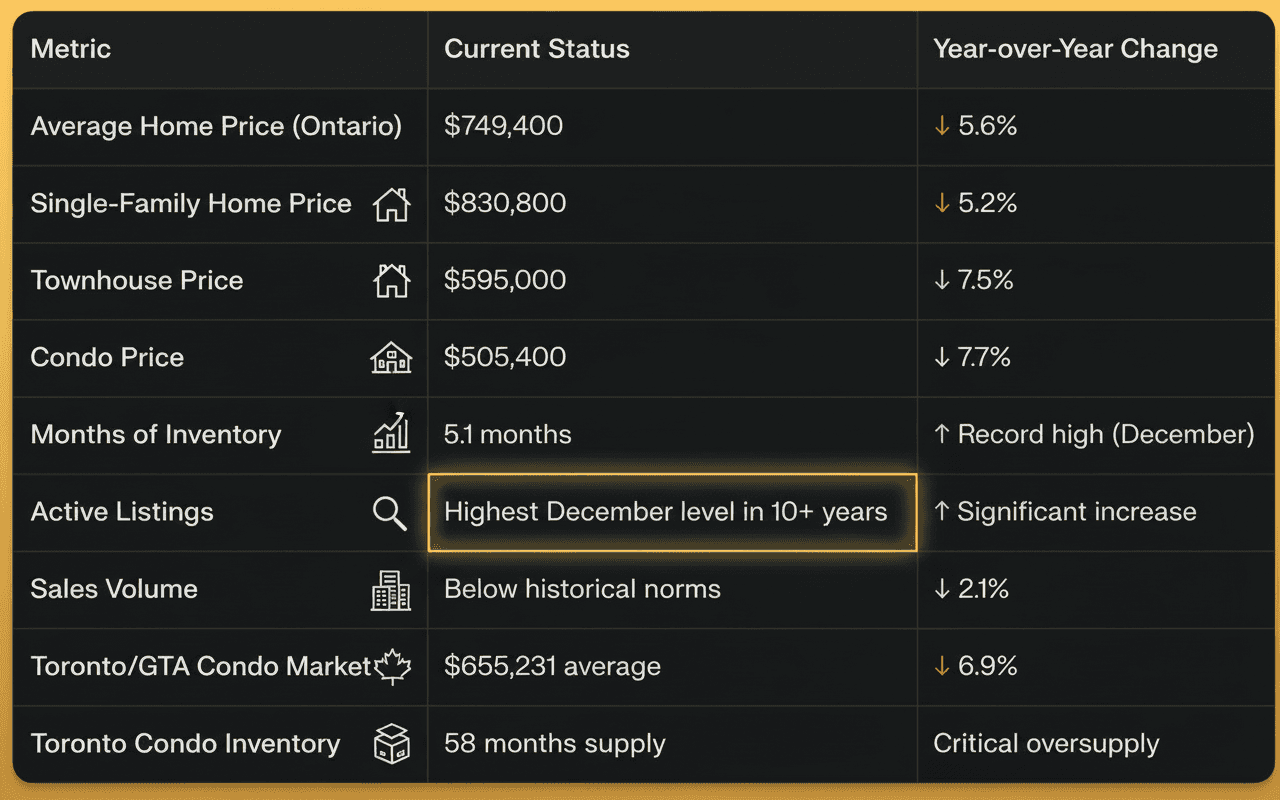
Market Characterization: Ontario is Canada's weakest housing market, with prices posting the steepest decline of any region. The market has shifted decisively to favor buyers, but this creates elevated transaction risks for all parties.
The GTA Condo Crisis: A Market in Distress
The Greater Toronto Area condo market faces exceptional challenges:
58 months of inventory (over 4 years' worth at current sales rates)
Normal balanced market: 3-4 months of inventory
New condo sales: 1,807 units sold in first 10 months of 2025 (↓ 56% from 2024)
Record completions: ~29,000 new condos completing in 2024-2025, flooding the market
Assignment market collapse: Pre-construction buyers unable to close or assign contracts
Price decline from peak: 15-20% from 2023 highs
Legal Risk: Thousands of buyers who purchased pre-construction condos years ago now face closing on properties worth significantly less than their contracted purchase price, leading to financing failures, deposit forfeitures, and breach of contract disputes.
Our Approach
OUR LAW FIRM'S APPROACH: PROACTIVE, PROTECTIVE, RESULTS-DRIVEN
At AboutLaw.ca, we recognize that Ontario's 2026 real estate market presents unprecedented complexity and risk. Our approach is designed to anticipate problems, protect your interests, and ensure successful closings even in challenging conditions.
Our Four-Pillar Real Estate Protection Strategy
PILLAR 1: EARLY ENGAGEMENT & RISK ASSESSMENT
What We Do:
Pre-Offer Legal Review (Recommended Before Signing)
Review draft Agreement of Purchase and Sale BEFORE you sign
Identify problematic clauses, missing protections, ambiguous terms
Recommend conditions to protect your interests (financing, inspection, sale of property, lawyer review)
Advise on deposit amount (minimize risk exposure)
Flag unusual terms or seller demands that create legal risk
Immediate Post-Acceptance Engagement
Engage us immediately after offer accepted (don't wait weeks)
Conduct preliminary title search within 48 hours
Identify potential title issues early (weeks before requisition deadline)
Order survey, property tax certificate, utility clearances immediately
Frontload due diligence to maximize time for issue resolution
Market Condition Analysis
Assess current market trends affecting your transaction
Advise on appraisal risk based on recent comparables
Identify financing red flags (mortgage stress test, debt ratios, employment verification)
Provide realistic timeline expectations and delay contingencies
Why This Matters:
80% of closing problems can be prevented or mitigated with early identification
Title defects discovered 3 weeks before closing = time to cure
Title defects discovered 3 days before closing = crisis
Client Outcome: Buyers and sellers have full visibility into transaction risks BEFORE points of no return, enabling informed decisions and proactive solutions.
PILLAR 2: COMPREHENSIVE DUE DILIGENCE & TITLE PROTECTION
What We Do:
Thorough Title Examination (Ontario Land Registry System via Teraview)
Search 40+ years of title history (exceeding standard 40-year requirement)
Identify all registered encumbrances: mortgages, liens, easements, restrictive covenants
Execution searches on all parties (judgment creditors, bankruptcy, writs)
Corporate searches (if seller is corporation)
Estate searches (if seller is estate trustee/executor)
Municipal tax and utility arrears searches
Planning Act compliance verification (subdivision, zoning)
Construction Lien Risk Assessment
Verify dates of construction/renovation
Calculate 45-day lien period expiry
Search for registered construction liens
Obtain statutory declarations from seller regarding contractor payments
Recommend title insurance coverage for lien risks
Advise on closing delay if construction recently completed (to allow lien period expiry)
Survey and Boundary Review
Review current survey (if available) or order new survey
Identify boundary encroachments, easements, rights-of-way
Compare survey to zoning by-laws (setback requirements)
Flag issues requiring resolution or title insurance coverage
Environmental Due Diligence
Review environmental reports (Phase I/II assessments if commercial)
Search records for underground storage tanks, contamination
Verify compliance with environmental regulations
Advise on environmental liability risks
Critical Deadline Management
Calculate and calendar ALL key dates: requisition date, condition dates, closing date, document delivery dates
Deliver requisitions (objections to title) BEFORE requisition deadline
Ensure seller has maximum time to cure defects
Follow up persistently on outstanding issues
Why This Matters:
35% of closings delayed by title issues
Early detection = early resolution
Missing requisition date = accepting defective title
Title insurance doesn't replace proper due diligence (it supplements it)
Client Outcome: Buyers receive clear, marketable title free from defects. Sellers can demonstrate clear title to facilitate smooth closing. Issues identified early with time for resolution.
PILLAR 3: FINANCING COORDINATION & CLOSING MECHANICS
What We Do:
Mortgage Lender Coordination
Communicate with lender's lawyer early and often
Confirm mortgage instructions and requirements
Verify mortgage funds release timeline
Identify documentation gaps early (insurance, pay stubs, appraisals)
Escalate issues to mortgage broker/lender if delays anticipated
Arrange backup plans if financing at risk
Closing Fund Management
Prepare detailed Statement of Adjustments 1 week before closing (not day before)
Verify all funds required for closing (down payment, land transfer tax, legal fees, adjustments)
Confirm method of fund delivery (bank draft, wire transfer, certified cheque)
Verify funds received in trust account with adequate clearance time
Never rely on "day-of" funds unless unavoidable
Same-Day Transaction Orchestration
Structure same-day sale/purchase with appropriate time gap (sale closes morning, purchase closes afternoon)
Arrange holdback protections if necessary
Communicate with other lawyers to coordinate timing
Monitor sale closing progress in real-time
Have contingency plans if sale delayed
Registration Timing Optimization
Avoid month-end, Fridays, pre-holiday closings when possible
Schedule registration for mid-day (10:00 AM - 2:00 PM window) to allow buffer
Use electronic registration (Teraview) for speed
Monitor Land Registry system for delays
Complete registration immediately upon receiving all funds and documents
Title Insurance Placement
Recommend appropriate title insurance coverage (not just lender's policy)
Obtain owner's title insurance policy (one-time premium, lifetime coverage)
Ensure coverage for: fraud, title defects, survey issues, construction liens, zoning violations, access issues
Cost: $200-$500 (one-time) for lifetime protection
Why This Matters:
35% of closing delays are financing-related
Proactive coordination prevents last-minute crises
Same-day transactions require expert choreography
Title insurance is essential backup protection
Client Outcome: Closings proceed on schedule with funds in place, documents registered timely, and keys delivered as planned. Title insurance provides lifetime peace of mind.
PILLAR 4: AGGRESSIVE PROBLEM RESOLUTION & LITIGATION READINESS
What We Do:
Proactive Issue Resolution
Negotiate directly with opposing counsel to resolve title defects
Coordinate mortgage discharges, lien payments, judgment satisfactions
Obtain indemnities from sellers for unresolved minor issues
Structure price adjustments when issues cannot be fully cured
Negotiate extensions when necessary (with client consent)
Mediate disputes over contract interpretation, property condition, included chattels
Deposit Protection Strategies
For Buyers:
Structure deposits to minimize risk (recommend conditions, holdbacks)
Negotiate deposit return provisions if conditions not satisfied
Document ALL efforts to satisfy conditions (good faith requirement)
Advise on relief from forfeiture prospects if facing default
Pursue equitable remedies if seller breach or bad faith
For Sellers:
Enforce deposit forfeiture rights when buyer defaults
Pursue additional damages if deposit insufficient to cover losses
Mitigate damages through timely re-listing
Document all losses (carrying costs, price decline, legal fees)
Defend against unwarranted relief from forfeiture claims
Litigation & Dispute Resolution
Pre-litigation demand letters and negotiations
Ontario Superior Court of Justice litigation if necessary
Specific performance claims (forcing completion)
Damages claims (compensating losses)
Injunctive relief (preventing wrongful actions)
Summary judgment motions (expedited resolution)
Transaction Rescue Services
Creative solutions to save transactions on verge of collapse
Vendor take-back mortgages (seller financing)
Price renegotiations based on appraisals, market changes
Repair escrows/holdbacks for condition issues
Interim occupancy agreements if closing delayed
Why This Matters:
Not all transactions close smoothly—expert problem-solving is essential
Deposit forfeiture ($40,000-$100,000+) is catastrophic—aggressive protection required
Early legal intervention often saves transactions that would otherwise fail
Litigation readiness encourages opposing party to negotiate reasonably
Client Outcome: Problems resolved efficiently and cost-effectively. Deposits protected. Transactions rescued from brink of failure. When litigation necessary, aggressive representation to achieve favorable outcomes.